
Hunt Lawn Edging Services
With years of expertise and a commitment to excellence, Hunt Lawn Edging Services delivers clean, crisp borders that elevate your property's curb appeal. Our skilled team uses professional-grade equipment and proven techniques to give your lawn the polished, well-maintained look it deserves — on time, every time, and at a price you'll love.
Our Hunt Landscaping & Yard Care Services
When to Schedule Lawn Edging in Hunt, Texas – Seasonal Guide
In Hunt, Texas, timing your lawn edging is crucial for maintaining crisp, healthy borders throughout the year. The region’s unique blend of Hill Country climate, with its mild winters and hot, humid summers, means that the best periods for edging are typically early spring and late fall. These windows avoid the extremes of summer heat and winter frost, allowing for optimal grass recovery and growth. Neighborhoods near the Guadalupe River or around Schumacher Crossing often experience microclimates, where shade from mature oaks and pecans can delay soil warming in spring, making it important to monitor local conditions closely.
Local environmental factors such as late spring frost dates, periodic drought risk, and the prevalence of rocky, alkaline soils all play a role in determining the best time for lawn edging. Areas like the Kerrville-Schreiner Park vicinity may also face municipal watering restrictions, which can impact lawn care schedules. For more information on local regulations and best practices, visit the Sudbury municipal resource.
Local Factors to Consider for Lawn Edging in Hunt
- Tree density and shade coverage, especially near the Guadalupe River
- Soil type (rocky, alkaline soils common in Hunt)
- Seasonal precipitation patterns and drought risk
- Frost dates and temperature fluctuations
- Terrain slope and drainage
- Municipal restrictions on water usage
Benefits of Lawn Edging in Hunt
Clean and Defined Lawn Borders
Enhanced Curb Appeal and Property Value
Reduced Weed Growth Along Edges
Professional and Experienced Landscaping Crew
Low-Maintenance Edging Solutions
Affordable Lawn Edging Services in Hunt
Hunt Lawn Edging Types

Metal Lawn Edging
-
Plastic Lawn Edging
-
Stone Lawn Edging
-
Brick Lawn Edging
-
Wood Lawn Edging
-
Concrete Lawn Edging
-
Rubber Lawn Edging
Our Lawn Edging Process
Site Evaluation
Border Marking
Edge Cutting
Debris Removal
Final Inspection
Why Choose Hunt Landscape Services
Hunt Homeowners Trust Us
-
Years of Landscape Expertise
-
Competitive and Transparent Pricing
-
Licensed and Professional Team
-
Satisfaction Guarantee
-
Personalized Service Plans
-
Reliable and Timely Scheduling
-
Locally Owned and Operated
Coordinating Lawn Edging Services with Kerr County Departments in Hunt
Hunt is an unincorporated community in Kerr County, which means residents coordinate property maintenance matters through county-level departments rather than a municipal government. For lawn edging work that involves right-of-way areas, drainage ditches, or county road frontage, property owners should verify setback and maintenance expectations with the Kerr County Engineer's office. Edging along roadside shoulders or near drainage infrastructure can affect stormwater flow patterns, and the county engineer can clarify whether proposed work encroaches on county-maintained easements.
- Confirm whether lawn edges along county roads fall within a maintained right-of-way before cutting or reshaping borders
- Coordinate with county maintenance staff if edging debris could enter roadside drainage channels or culverts
- Dispose of edging clippings and soil trimmings on-site or through approved methods rather than pushing material into ditches or waterways
Because Hunt sits along the Guadalupe River corridor, the Upper Guadalupe River Authority monitors water quality in the region. Keeping edging debris out of tributaries and drainage paths supports broader watershed protection efforts.
Kerr County Engineer
Official Website: Kerr County Engineer
Kerr County Maintenance Department
Official Website: Kerr County Maintenance Department
How Hunt's Limestone Soils and Hill Country Climate Shape Lawn Edging
Hunt falls within the Central Texas Hill Country, classified under USDA Hardiness Zone 8b. The region's soils are predominantly limestone-derived, shallow, and alkaline, often with exposed caliche layers just inches below the surface. These conditions directly affect how lawn edging is performed and how equipment responds to the ground.
- Shallow, rocky soil profiles mean mechanical edgers frequently encounter limestone fragments and caliche hardpan, which can dull blades rapidly and require more frequent equipment maintenance
- Alkaline soil chemistry (typically pH 7.5–8.2) favors bermudagrass and buffalograss, both of which produce aggressive stolons that push into walkways, driveways, and bed borders, demanding consistent edging attention
- Seasonal aridity and flash-rain cycles cause soil to crack during drought and swell after heavy rain, shifting turf borders and hardscape edges out of alignment
- Steep terrain and sloped lots common throughout the Guadalupe River valley increase erosion risk when edging exposes bare soil along walkways or retaining walls
The USDA Web Soil Survey provides detailed soil mapping for parcels in the Hunt area, which can help property owners anticipate subsurface conditions before edging work begins. Humidity remains moderate compared to Gulf Coast regions, but summer temperatures regularly exceed 95°F, intensifying turf stress and accelerating lateral turf growth into hardscape zones.
Navigating Environmental Compliance and Stormwater Rules for Lawn Edging in Hunt
Although Hunt lacks a municipal code enforcement structure, lawn edging activities still fall under state and federal environmental standards. The Clean Water Act prohibits discharge of sediment, clippings, or soil material into waterways, and the TCEQ Phase II MS4 stormwater program establishes best management practices for controlling polluted runoff in Texas communities.
- Edging debris—soil strips, grass clippings, and root material—must not be swept or blown into roadside ditches, creek channels, or storm drainage inlets
- If chemical edging products or herbicide-based border treatments are used along turf margins, applicators must hold appropriate credentials under Texas Department of Agriculture pesticide licensing requirements
- Properties adjacent to the Guadalupe River, Johnson Creek, or other tributaries should maintain a vegetated buffer and avoid exposing bare soil at the turf edge near waterways
The Kerr County Environmental Health Department can address questions about environmental compliance for properties in unincorporated areas, including concerns about runoff into sensitive waterways.
Kerr County Environmental Health Department
Official Website: Kerr County Environmental Health Department
Timing and Methods for Lawn Edging Around Hunt's Drought and Freeze Cycles
Professional lawn edging in the Hill Country must account for the region's pronounced seasonal swings. The Texas A&M AgriLife Extension recommends scheduling edging during active warm-season turf growth, typically from late April through early October, when bermudagrass and buffalograss recover quickly from border disturbance.
- Spring (April–May): Ideal window for initial deep edging to redefine borders after winter dormancy and soil movement from freeze-thaw cycles
- Summer (June–August): Maintenance edging every two to four weeks controls aggressive stolon encroachment; schedule work during early morning hours to reduce heat stress on exposed turf margins
- Fall (September–October): Final edging pass before dormancy; avoid exposing bare soil late in the season when rain events can cause erosion on sloped lots
- Winter (November–March): Avoid mechanical edging on dormant turf, as damaged crowns cannot recover until spring green-up
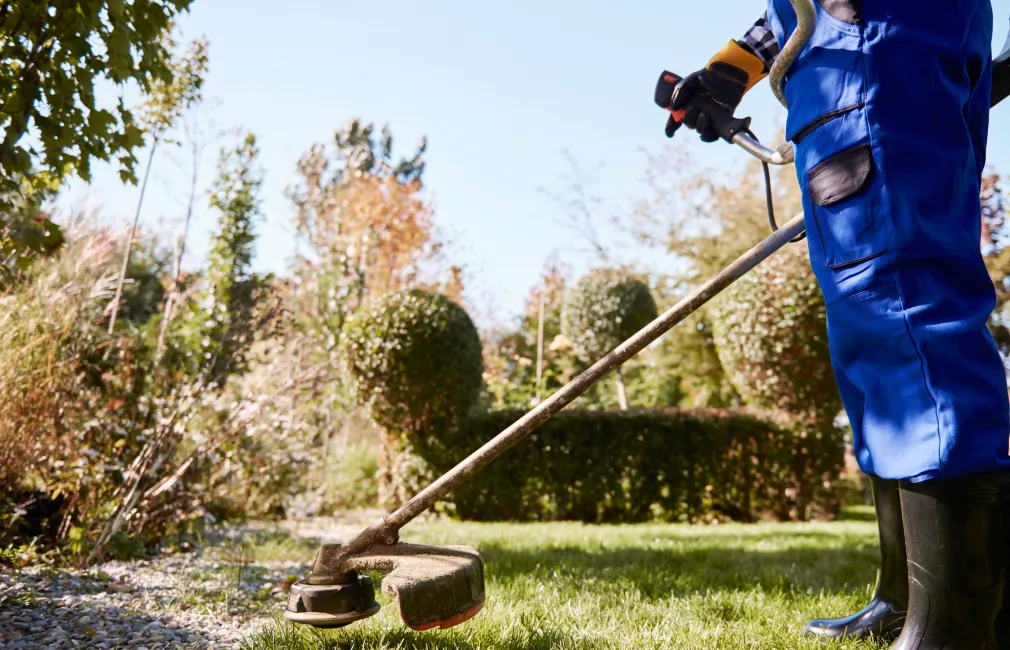
Blade edgers are generally preferred over string trimmers for clean, defined cuts along hardscape. On properties with caliche or limestone near the surface, carbide-tipped blades reduce wear. After edging, sweep or vacuum all loose soil and clippings from walkways and driveways rather than hosing material toward drainage paths.
What Neighborhoods Do We Serve Throughout Hunt, TX?
- Hunt proper along FM 1340: Properties along the main corridor feature varied lot sizes with mature live oaks and pecan trees, requiring careful edging around extensive root zones and shaded turf areas
- Mo-Ranch vicinity: Larger estate-style parcels near the Guadalupe River often have sloped terrain and limestone outcroppings that demand specialized edging equipment and erosion-conscious technique
- Crider's on the Guadalupe area: Riverfront and near-river properties require particular attention to keeping edging debris away from riparian zones and maintaining vegetated buffers
- Ingram-Hunt corridor along TX-39: Transitional properties between Hunt and Ingram often sit on smaller lots with defined hardscape borders, sidewalks, and driveways that benefit from frequent maintenance edging
- Upper Guadalupe River ranch properties: Rural acreage with fenced perimeters and gated entries may require edging along extended driveway borders, fence lines, and entry landscaping set in rocky Hill Country soil